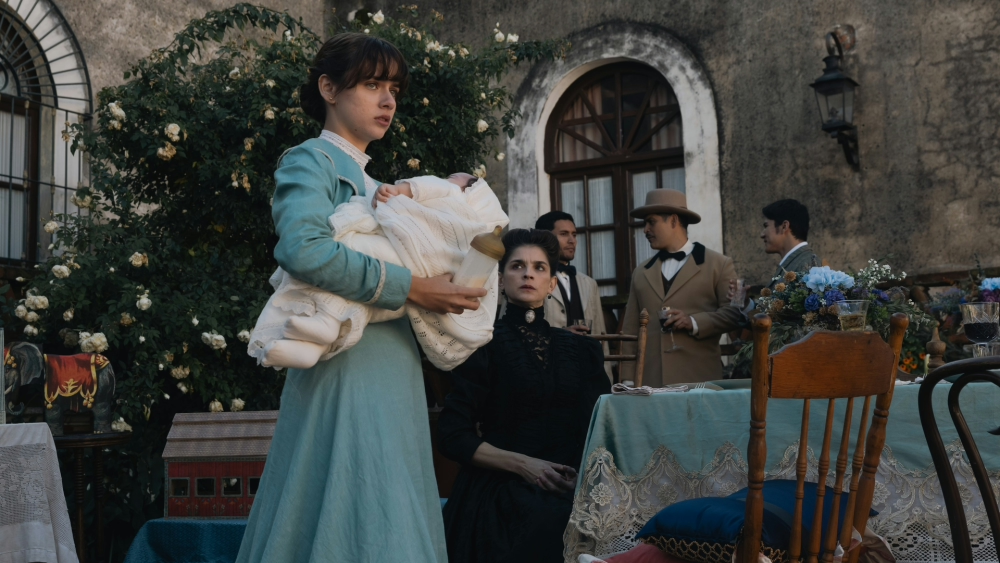
Max is getting ready to roll out the final chapter of the Like Water for Chocolate series, the TV adaptation of Laura Esquivel’s iconic novel. Starting February 16, 2026, the show returns for its second and last season, a closing act designed from the start as a two-part story. Producer Salma Hayek Pinault has been clear: this final run is meant to bring the story of Tita and Pedro to a definitive, emotionally complete conclusion.
How the final season is structured
The last season of the series unfolds over six episodes, released weekly beginning February 16. The story is paced as a single, continuous arc leading to a final episode scheduled for March 22. This structure underlines the original creative intention: two seasons only, forming one complete adaptation of the book.
From the outset, the producers committed to a limited run, and that choice was reaffirmed during a 2024 event for HBO and Max, where Salma Hayek Pinault explained the team’s approach and emphasized their desire to keep the show focused and special rather than stretching the narrative beyond its natural end.
- Episode count: 6 episodes
- Streaming: Max
- Series finale date: March 22
A character-driven ending centered on Tita’s choices
The new season shifts the spotlight even more firmly onto Tita, played by Azul Guaita, and the decisions that will ultimately define her life. Her relationship with Dr. Brown (Francisco Angellini) opens a path toward independence and a gentler, more self-determined future. At the same time, Pedro’s (Andrés Baida) return reignites a powerful, forbidden love that clashes with rigid family expectations and deeply rooted social norms.
The show continues to use its historical backdrop to amplify the characters’ struggles. Political turmoil, personal trauma and long-buried family secrets intersect with Tita’s journey, placing her inner conflict within a larger landscape of upheaval. Throughout, the kitchen remains the story’s emotional core: it is where Tita turns feelings into food, and where cooking becomes both a personal language and a form of intimate, cultural resistance.
- Key themes: family traditions, individual freedom, star-crossed romance
- Backdrop: social and political transformation
- Signature elements: magical realism and emotions expressed through cooking
Cast and creative team returning to close out the story
To deliver a cohesive ending, the series brings back the main ensemble that anchored the first season. Azul Guaita and Andrés Baida reprise their roles as Tita and Pedro, joined again by Irene Azuela, Ana Valeria Becerril, Andrea Chaparro, Ángeles Cruz, Mauricio García Lozano, Ari Brickman and Louis David Horné. Keeping the same core cast helps maintain the emotional through line established from the beginning.
Behind the camera, the creative continuity is just as strong. Julián de Tavira returns to direct, while Silvia Ortega Vettoretti leads the writing team, working alongside Cynthia Fernández Trejo, Jerry Rodríguez and María Jaén. The series is produced by Warner Bros. Discovery, Ventanarosa Productions and Endemol Shine Boomdog, ensuring that the final season remains aligned with the visual style and symbolic depth of the source material.
Together, these elements set up a closing chapter that reframes a literary classic for contemporary audiences, blending love, social constraints and cultural identity through the lens of magical realism.
The final season premieres on February 16 on Max.Will there be a season 3?
No. The second season has been confirmed as the last, in order to complete the adaptation while respecting the novel’s structure.
Which cast members are back for the last season?
Azul Guaita, Andrés Baida, Irene Azuela, Ana Valeria Becerril, Andrea Chaparro, Ángeles Cruz, Mauricio García Lozano, Ari Brickman and Louis David Horné all return.
FAQ
How many episodes are in the final season of Like Water for Chocolate?
The final season is composed of six episodes released weekly.
Where can viewers in the United States watch the series?
The series is available to stream on Max in the United States.
What makes the kitchen so important in the story?
The kitchen is portrayed as Tita’s primary space of expression, where she channels her emotions into food and turns cooking into a symbolic act of personal and cultural resistance.
Who leads the creative vision for the final season?
Director Julián de Tavira and head writer Silvia Ortega Vettoretti guide the final season, working with a writing team that includes Cynthia Fernández Trejo, Jerry Rodríguez and María Jaén, under the production of Warner Bros. Discovery, Ventanarosa Productions and Endemol Shine Boomdog.