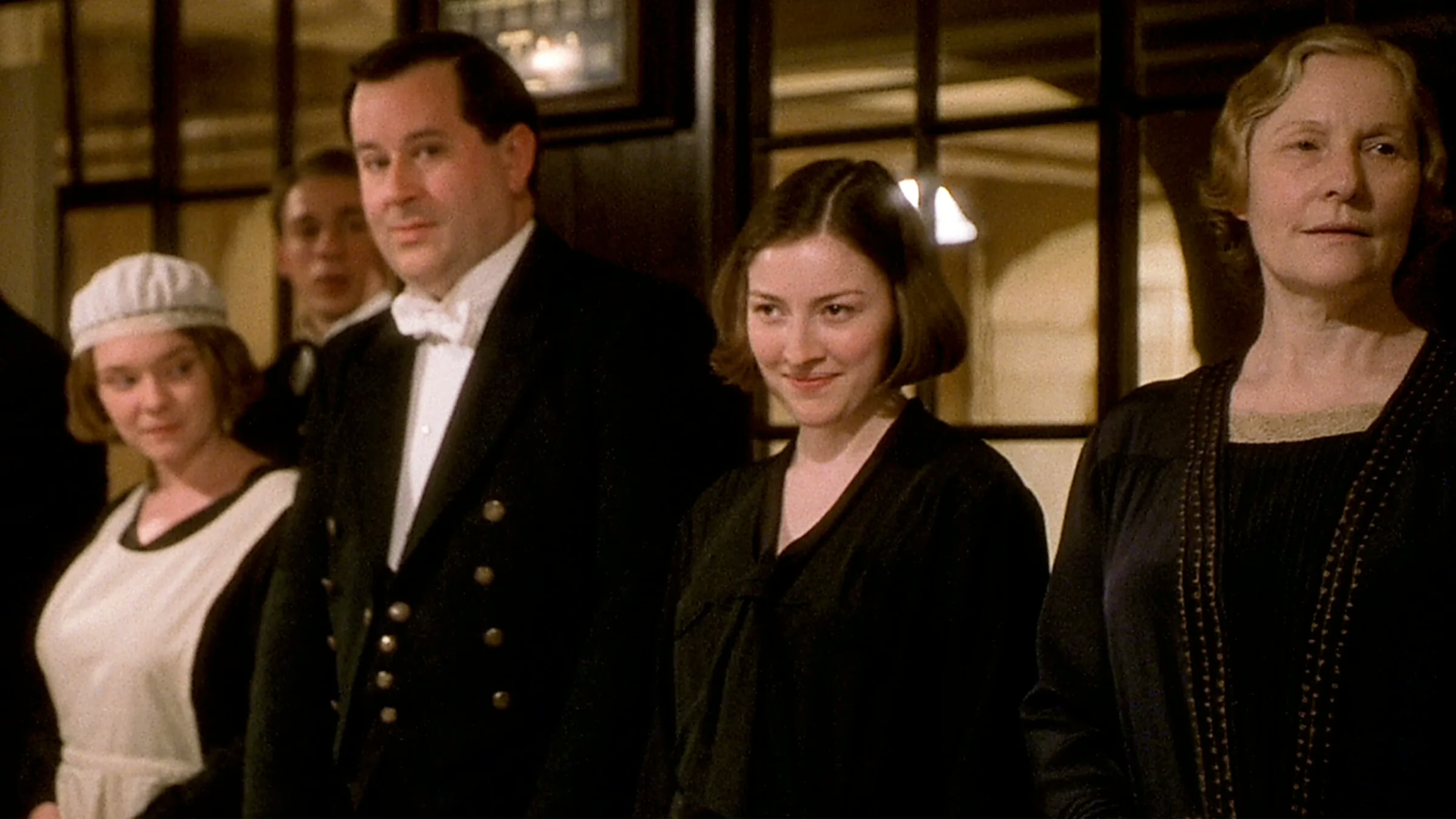
Released in 2001 and directed by Robert Altman, Gosford Park blends an upstairs‑downstairs drama with a classic whodunit setup. Set in November 1932 inside a large country estate, the movie uses a murder investigation less as a puzzle to solve than as a way to expose class codes, unspoken frustrations and rigid social roles.
A country weekend where status rules everything
The entire story unfolds over a hunting weekend hosted by Sir William McCordle and his wife in a sprawling mansion. Guests and relatives enjoy the comfort of the upper floors and drawing rooms, while a busy world of servants operates out of sight in the hallways and kitchens below.
The film constantly mirrors these two spheres. Refined small talk among the wealthy contrasts with the sharper, more perceptive comments from the domestic staff, who watch everything, know more than they say, and carry the weight of long‑standing resentments. When the master of the house is killed, the official inquiry begins, but the real interest of the movie lies in what the crime uncottens about humiliation, dependence and power.
A rich ensemble where every character has a function
Gosford Park is built as a true ensemble piece: no single protagonist dominates the story, and even characters who appear only briefly fit into a precise narrative pattern. Michael Gambon plays an imposing, authoritarian host, while Kristin Scott Thomas portrays a wife intensely focused on image and propriety. Maggie Smith, as the Countess of Trentham, brings a sharply humorous and cutting presence to each of her scenes.
The movie gives particular weight to the servants’ perspective, notably through the roles played by Helen Mirren, Kelly Macdonald and Clive Owen. Altman avoids a strict hierarchy among their storylines. Instead, paths intersect, brush past each other or never meet at all, creating the sense of a closed world in which each person has a fixed place and performs a predefined part.
A directing style built on restraint and close observation
Altman’s staging favors wide shots, smooth camera moves and overlapping dialogue. This visual and sonic approach blurs clear boundaries between spaces, linking rooms and corridors and emphasizing how different classes inhabit the same building while remaining separate. Viewers are invited to piece together the narrative themselves from what they catch in the frame and on the soundtrack.
Patrick Doyle’s score supports this observational style without overemphasizing dramatic beats. Rather than relying on big twists, the film progresses through accumulating small gestures, glances and details that gradually draw a complex portrait of the house and the people who live and work in it.
Why Gosford Park matters in 2000s cinema
Upon its release, Gosford Park received widely positive critical attention and won several major awards, including the Academy Award for Best Original Screenplay for writer Julian Fellowes. It is often cited as a key example of ensemble filmmaking and as a movie that helped renew interest in period stories focused on class relations.
The film stands out because it uses the conventions of a murder mystery without being confined by them. The crime functions more as a catalyst than a destination: what really counts is the collective portrait that emerges from the investigation and the way it exposes human relationships shaped by hierarchy and silence.
FAQ
When is Gosford Park airing?
The film is scheduled to air on Saturday, February 8 from 9:00 p.m. to 11:15 p.m.
Is Gosford Park primarily a crime movie?
Although the story centers on a murder and an ensuing investigation, the film focuses more on social observation and character relationships than on traditional crime suspense.
What makes the ensemble cast of Gosford Park stand out?
Each role, from the wealthy hosts and guests to the domestic staff, serves a specific place in the overall design, with performances by Michael Gambon, Kristin Scott Thomas, Maggie Smith, Helen Mirren, Kelly Macdonald and Clive Owen all contributing to a tightly woven narrative.
Has Gosford Park influenced other works about class and society?
Yes. The film has strongly inspired later creations focused on early 20th‑century society and class relationships, particularly in television series built around similar themes.