Premiering on February 3, The Coming Future marks Cedric Klapisch’s return to feature filmmaking with a sweeping family drama that moves between intimate emotions and broader historical echoes. Shown out of competition at the 2025 Cannes Film Festival, the movie brings together a large ensemble cast and builds a story where personal memories constantly intersect with collective history.
A mysterious house that unlocks a family story
The narrative starts in 2025, when several distant relatives unexpectedly inherit an abandoned house. Left untouched for decades, this secluded property becomes the trigger for a personal investigation into their own origins and the shadowy parts of their family past.
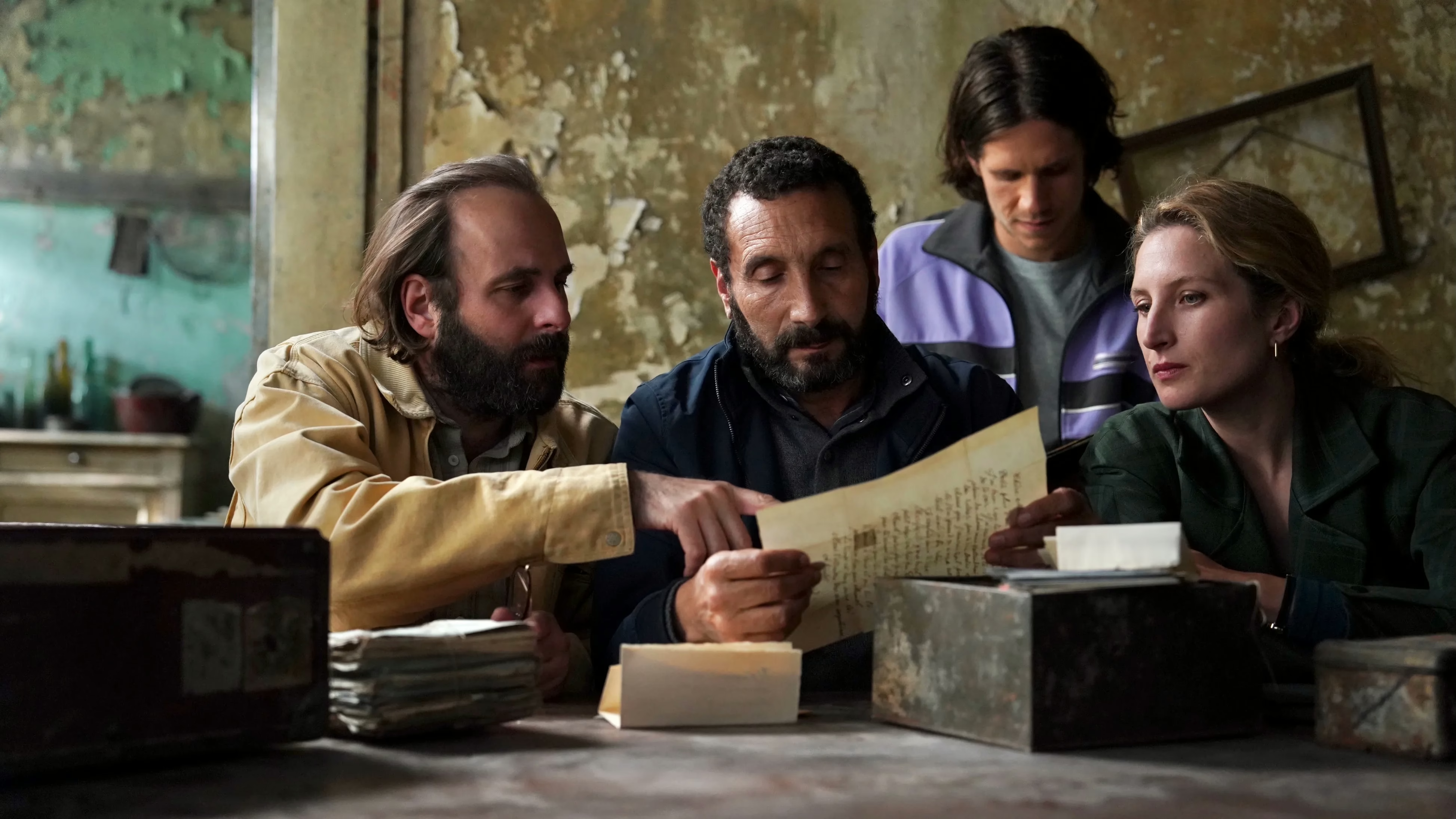
Four cousins begin to dig into the life of Adèle, a woman who once lived in that very house at the end of the 19th century. What begins as a practical question about what to do with the inheritance slowly turns into a journey through time and memory.
Through old letters, photographs and vivid sensory experiences inside the house, the characters piece together Adèle’s path. The film constantly moves back and forth between two eras, tying present‑day doubts and desires to an older memory shaped by artistic creation and the upheavals of the late 19th century.
How the film balances past and present
With The Coming Future, Klapisch continues his exploration of ensemble storytelling. The movie is built around a dual timeline: contemporary sequences are interlaced with reconstructed moments from the past, yet everything remains anchored in the same family and the same inherited space.
The setting plays a crucial role, functioning both as a physical backdrop and as a reservoir of recollections. The film uses this environment as a bridge between generations, showing how a single place can hold layers of emotional and cultural history.
Historical figures tied to the world of art also appear within the story through memories and re‑enactments. Their presence broadens the movie’s scope beyond one family tree, raising questions about cultural transmission and the ways in which traces of the past continue to influence the present.
A rich ensemble cast at the center of the drama
The Coming Future leans heavily on its ensemble cast. Suzanne Lindon takes on the role of Adèle, surrounded by Vincent Macaigne, Julia Piaton, Zinedine Soualem, Abraham Wapler, Paul Kircher, Vassili Schneider and Sara Giraudeau. In addition to these characters, several historical figures appear on screen, portrayed by well‑known faces from contemporary cinema.
This diversity of characters allows the film to multiply perspectives on family ties. The story examines openly embraced legacies, hidden areas no one wants to touch, and unexpected connections that emerge only when the past is confronted head‑on.
Ultimately, The Coming Future invites viewers to follow a family grappling with what the past leaves behind—and with the deeply personal decisions each person must make about how to carry, transform or break from that legacy.
FAQ
Is The Coming Future strictly a period piece?
No. While a significant part of the film takes place at the end of the 19th century, the story is anchored in 2025 and constantly moves between past and present, mixing contemporary drama with historical re‑creation.
What is the core theme of The Coming Future?
The movie centers on family legacy—how a group of relatives confronts what previous generations have left behind, from physical spaces to memories, secrets and cultural influences.
What kind of storytelling style does Cedric Klapisch use here?
He employs an ensemble, or choral, structure. Multiple characters and viewpoints intersect, with a narrative that weaves between two time periods while staying focused on the same family and shared inheritance.
Who plays Adèle in The Coming Future?
Suzanne Lindon plays Adèle, the woman who lived in the inherited house at the end of the 19th century and whose life story becomes the focus of the family’s investigation.