Spoiler warning: this article reveals the ending of Facing El Chapo.
Yes — the two federal officers hold their nerve, and Facing El Chapo ends with Joaquin “El Chapo” Guzman back in the hands of the authorities. After a nerve-shredding standoff at a roadside motel, naval forces reach officers Arturo Carmona and Hector Rosales before the cartel’s gunmen do, and the most wanted man in Mexico is taken into custody for good.
That is the short answer. The longer one — how a routine traffic stop hardens into a siege, why the two cops turn down a bribe that could change their lives, and what the closing title cards say really happened to them — is where the film earns its tension. Here is the ending of Facing El Chapo (released in Spanish-language territories as La Captura, “The Capture”), now streaming worldwide on Netflix, explained in full.
What Facing El Chapo Is About
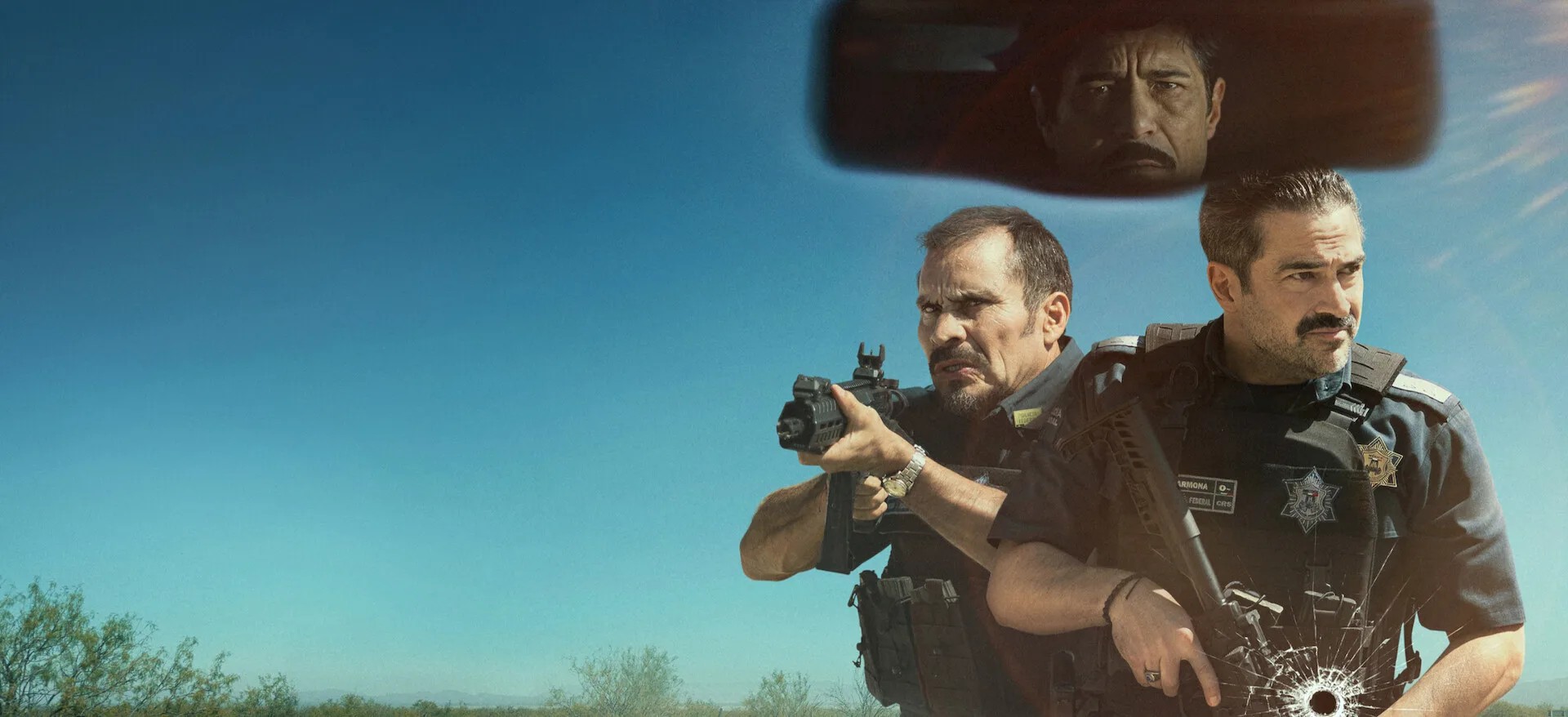
Directed by Chava Cartas, Facing El Chapo is a Mexican thriller that retells the 2016 recapture of Sinaloa Cartel leader Joaquin Guzman from an unusual angle: not the kingpin’s, but that of two ordinary federal officers who cross his path by accident. Arturo Carmona and Hector Rosales are on patrol in Los Mochis, in the state of Sinaloa, when a check on a vehicle flagged as stolen suddenly puts them face to face with the fugitive. The film is far more interested in their impossible choice than in Guzman’s mythology, and that choice is the engine of the whole third act.
How the Officers End Up With El Chapo
The confrontation grows out of a failed raid. After marines storm a cartel safe house in Los Mochis, Guzman and his security chief, Jorge Ivan “El Cholo” Gastelum, slip away through a network of tunnels connected to the city’s storm drains. The two men resurface in the streets and commandeer a car at gunpoint. Carmona and Rosales spot the flagged vehicle and begin tailing it, and the moment they clock the identity of the passenger they understand exactly how much danger they are in.
Why the Officers Refuse the Bribe
Guzman’s first move is not a threat but an offer. He tries to convince Carmona and Rosales that they have far more to lose than to gain by arresting him, reminding them of his reach and steadily raising the sums of money on the table. Rosales hesitates. Carmona does not. Crucially, the two officers also realize that their faces and their license plate have already been made — letting Guzman walk would not buy them safety, only a different kind of death. From that point the film becomes a race against the clock, as cartel operatives fan out across the city trying to reach their boss before the security forces can lock the arrest down.
The Motel del Puerto Standoff
Waiting for backup, Carmona and Rosales take cover at the Motel del Puerto. The hideout does not stay secret for long. A motel employee recognizes Guzman and passes word to a cartel fixer named Lagarto, who sends men both to the motel and to Carmona’s family home. The officer’s wife and children narrowly escape the attack thanks to the intervention of the armed forces. At the motel itself, the two cornered officers get unexpected help from Barraza, an undercover officer who is already on the scene — the thin margin that keeps them alive until the cavalry arrives.
Is El Chapo Arrested at the End?
Yes. Naval forces led by an officer named Ortega reach the motel just ahead of the cartel’s gunmen. Guzman and El Cholo are taken into custody, and the men dispatched to Carmona’s home are neutralized. A last flash of friction crackles between the rival security services over who will handle the high-profile transfer, but the outcome is not in doubt: El Chapo is in the hands of the authorities, and the operation is over.
What Happens to Arturo and Rosales
The film closes the loop on its two protagonists with a set of title cards. Guzman is sentenced to life in prison plus 30 additional years. El Cholo is extradited to the United States to answer charges tied to drug and weapons trafficking. Carmona receives a promotion and a commendation before being reassigned to a security posting abroad, and Rosales goes overseas alongside him. Their new locations, the film notes, remain confidential — a quiet reminder that for the people who actually bring a figure like Guzman in, the danger does not end with the arrest.
The True Story Behind Facing El Chapo
The film draws on the real operation that led to Guzman’s recapture on January 8, 2016, in Los Mochis. He had escaped the maximum-security Altiplano prison roughly six months earlier, in July 2015, through a tunnel dug beneath his cell. After the marine-led raid on his hideout, he fled through the drainage system before being intercepted on a highway outside town. In the real timeline, Guzman was extradited to the United States in January 2017, convicted in a federal court in Brooklyn in February 2019, and sentenced that July to life plus 30 years — the same fate the movie’s closing cards describe.
The screenplay is credited to novelist Bernardo Esquinca and journalist Hector de Mauleon. Alfonso Herrera plays Arturo Carmona and Noe Hernandez plays Hector Rosales, with Hector Kotsifakis as Guzman and Juan Pablo Cruz Garcia as El Cholo. Here is the official trailer:
Frequently Asked
Is El Chapo arrested at the end of Facing El Chapo?
Yes. Naval forces reach the motel where Carmona and Rosales are holding out, and Guzman is taken into custody along with El Cholo.
Is Facing El Chapo based on a true story?
Yes. It is inspired by the operation that led to Joaquin “El Chapo” Guzman’s recapture in Los Mochis on January 8, 2016.
What happens to the two officers?
Carmona is promoted and decorated, and both officers are reassigned to postings abroad. The film states that their locations are kept confidential.
Where can I watch Facing El Chapo?
The film is streaming now on Netflix. It is titled La Captura in Spanish-language territories.